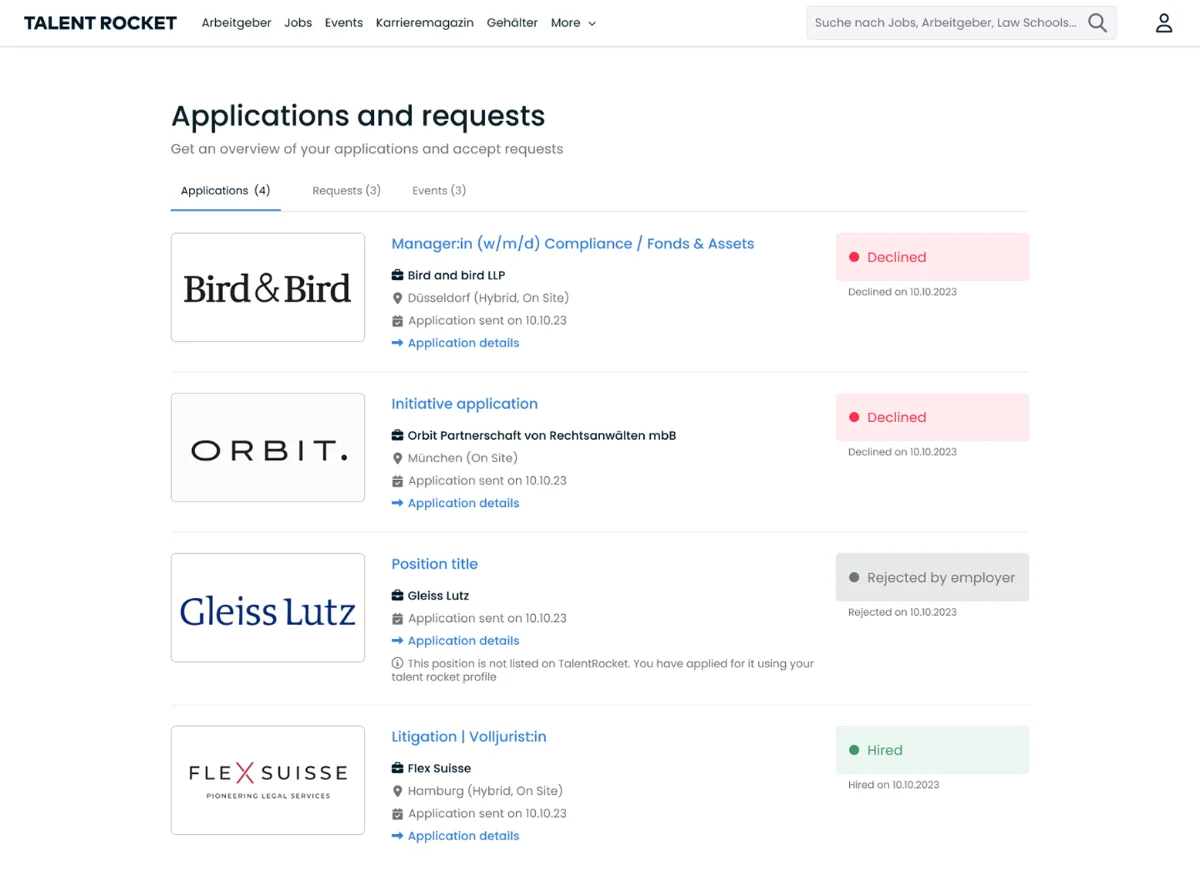
For three years I owned the entire design function at Talent Rocket — 50+ shipped projects across candidate and employer experiences.
This case focuses on one product challenge that changed how the business operated: turning hire verification into a reliable product workflow.
The problem wasn't tracking applications. The problem was knowing which applications actually resulted in hires.
How the process really worked…
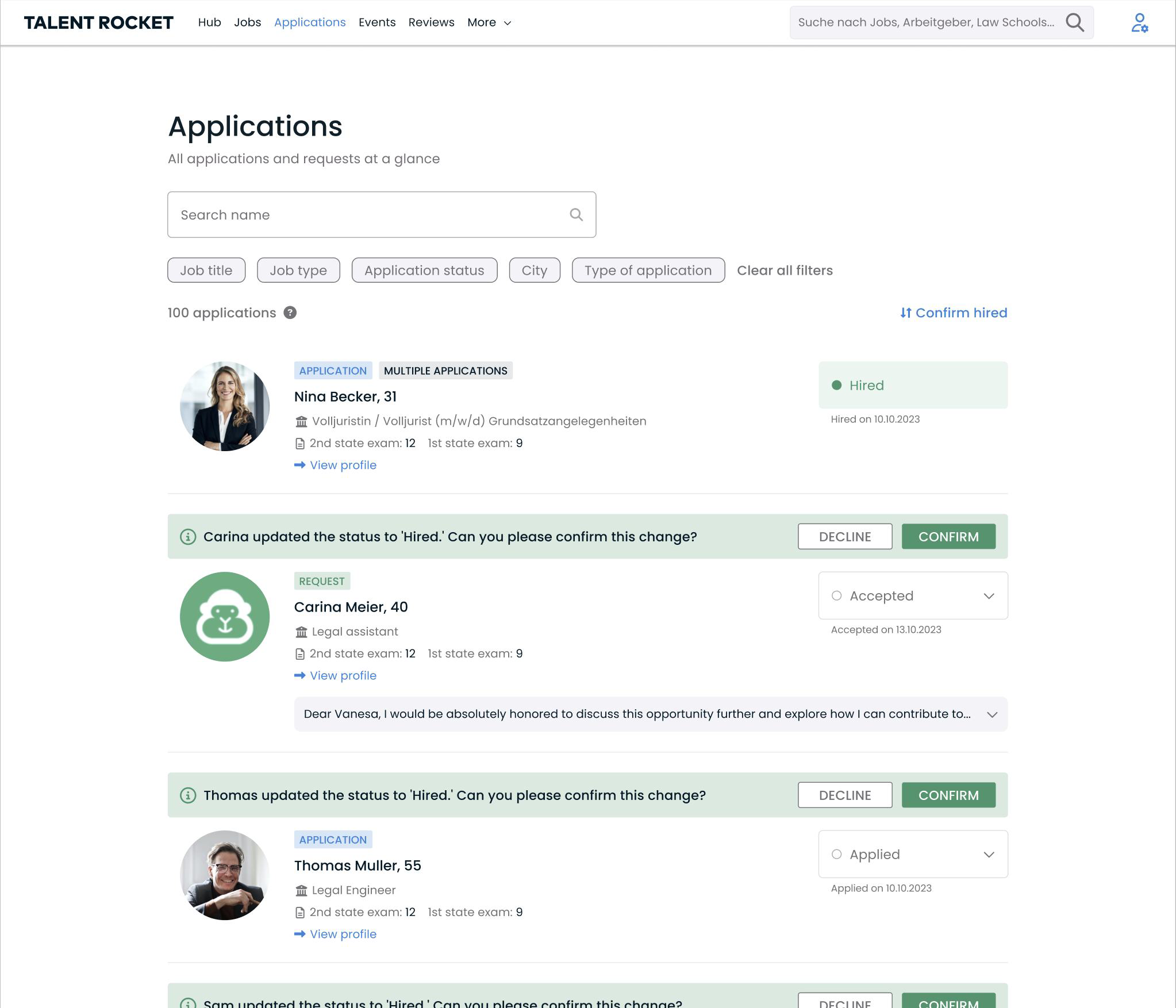
Every successful hire generated revenue. But the information required to verify those hires lived outside the platform. The sales team manually searched LinkedIn, contacted candidates, checked employer updates, and pieced together evidence from multiple sources. Hiring outcomes existed, but they were not product data.
{{ s.n }}{{ s.text }}
{{ s.n }}{{ s.text }}
The company's revenue event was being reconstructed through detective work.
Tracking only works if everyone benefits.
During discovery we found a simple problem: candidates and employers both influenced application statuses, but neither had a strong reason to keep them updated.
Any tracking feature that only benefited Talent Rocket would quickly become abandoned.
How might we create a workflow where both sides naturally keep application data accurate?
Shared ownership instead of admin ownership.
Rather than creating another internal tracking system, we designed a workflow that distributed responsibility across both sides of the marketplace.
THE CORE DECISION
Mirrored status tracking.
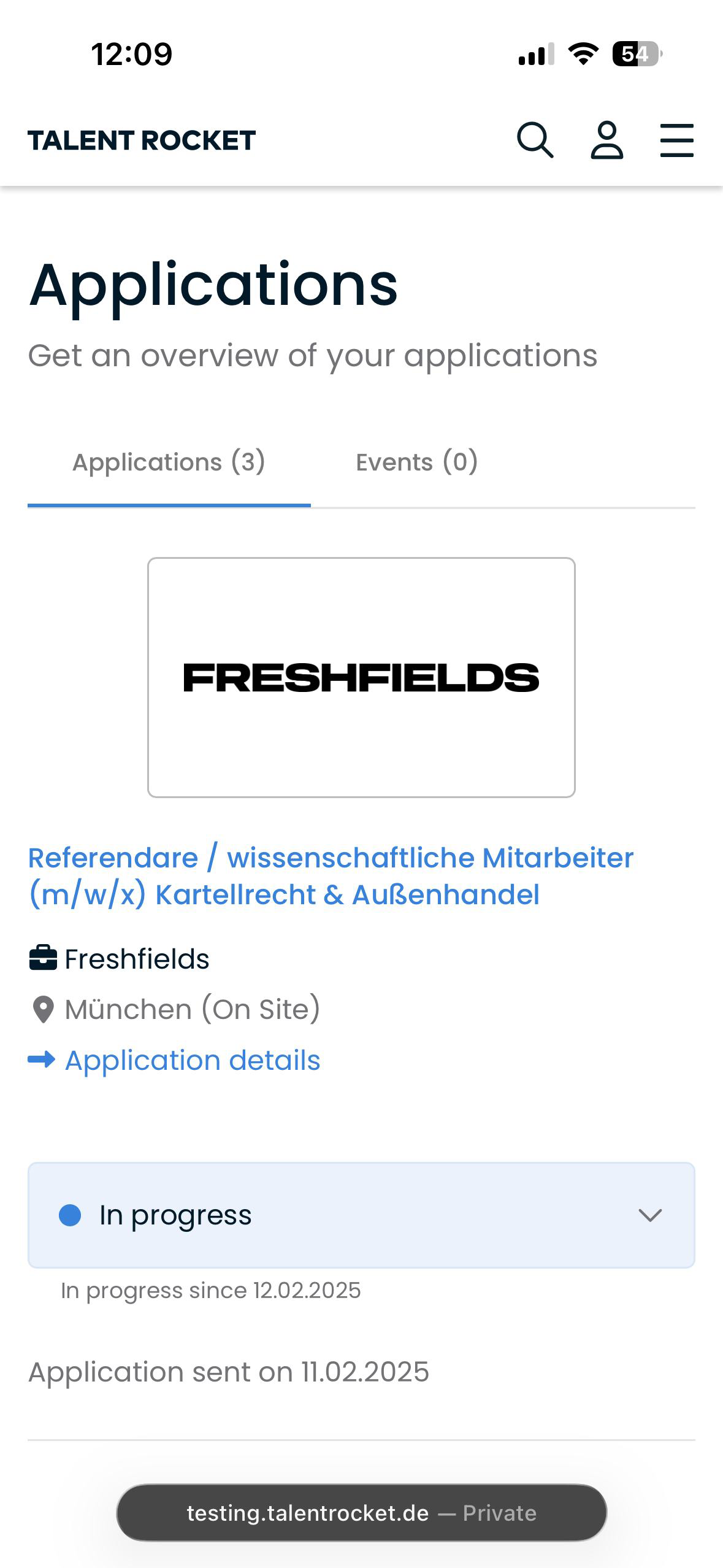
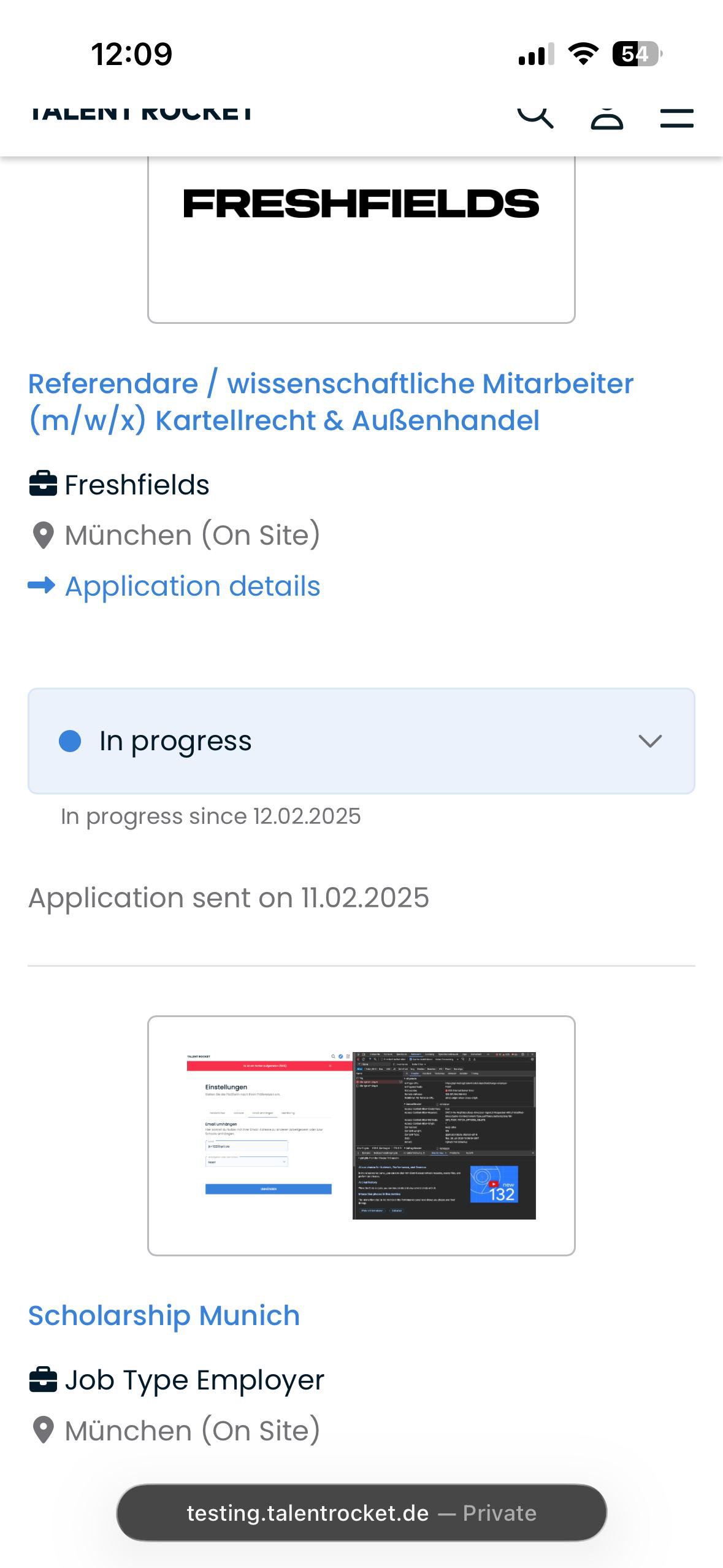
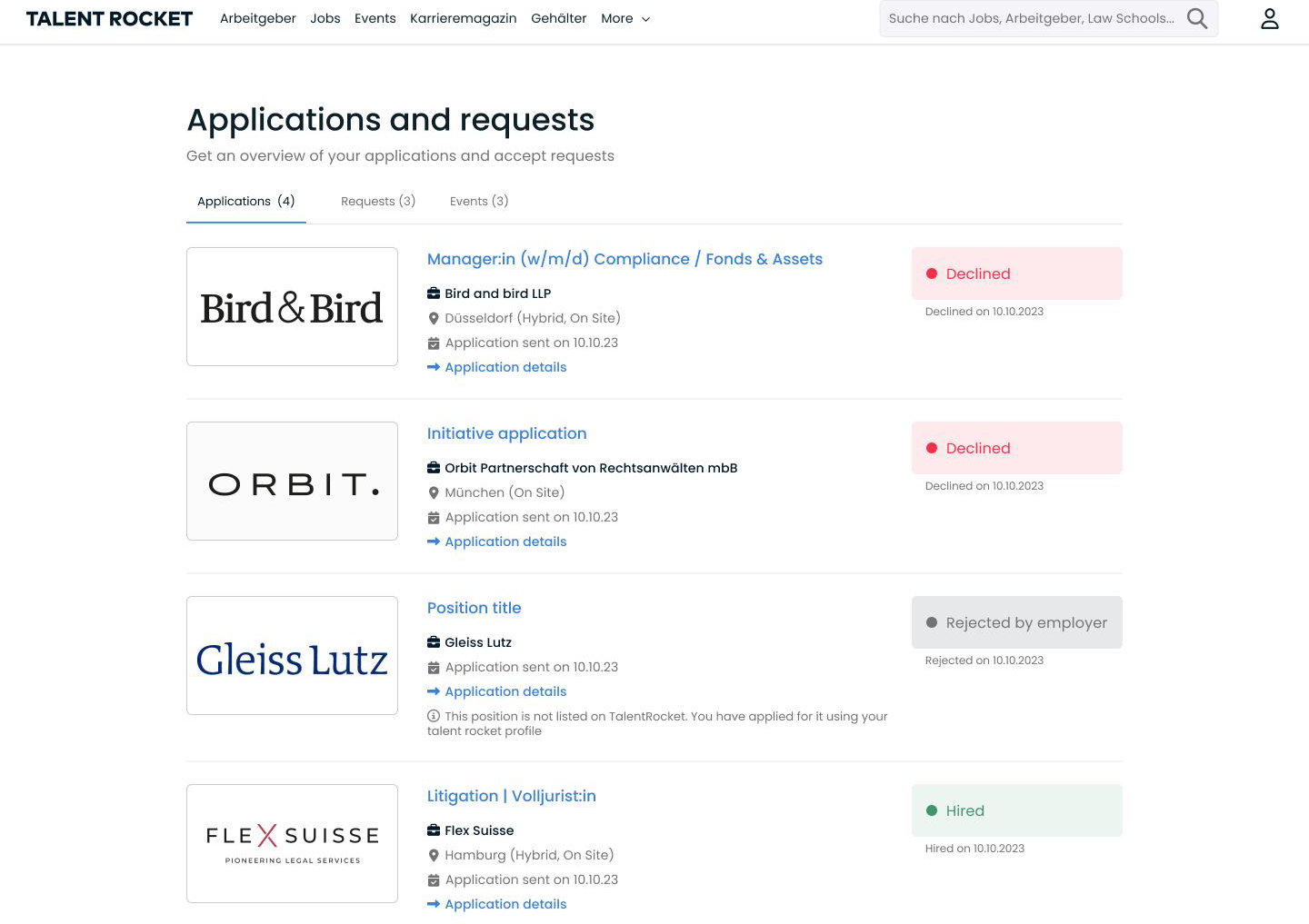
When a candidate updated an application, employers could see it. When employers updated progress, candidates could see it. The status stopped being administrative data and became communication.
EMPLOYER-SIDE STATUS-UPDATE FLOW
Every gate here has a mirror on the candidate side — the same cascade of checks, update confirmations, and fallbacks, reached from the opposite point of view. That symmetry is what keeps one update true for both.
A hiring workflow designed to stay alive.
We redesigned application management across the marketplace. The solution introduced:
Together these features created continuous incentives for both sides to keep information current.
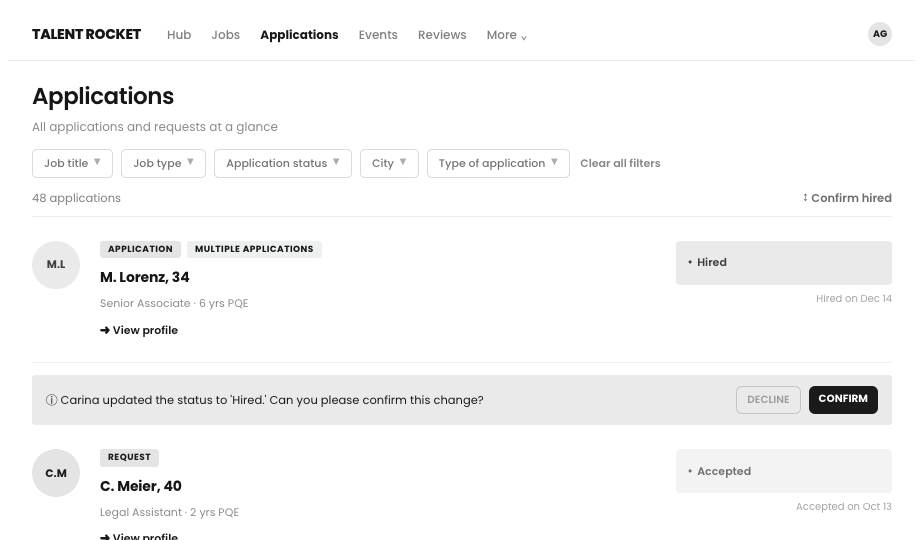
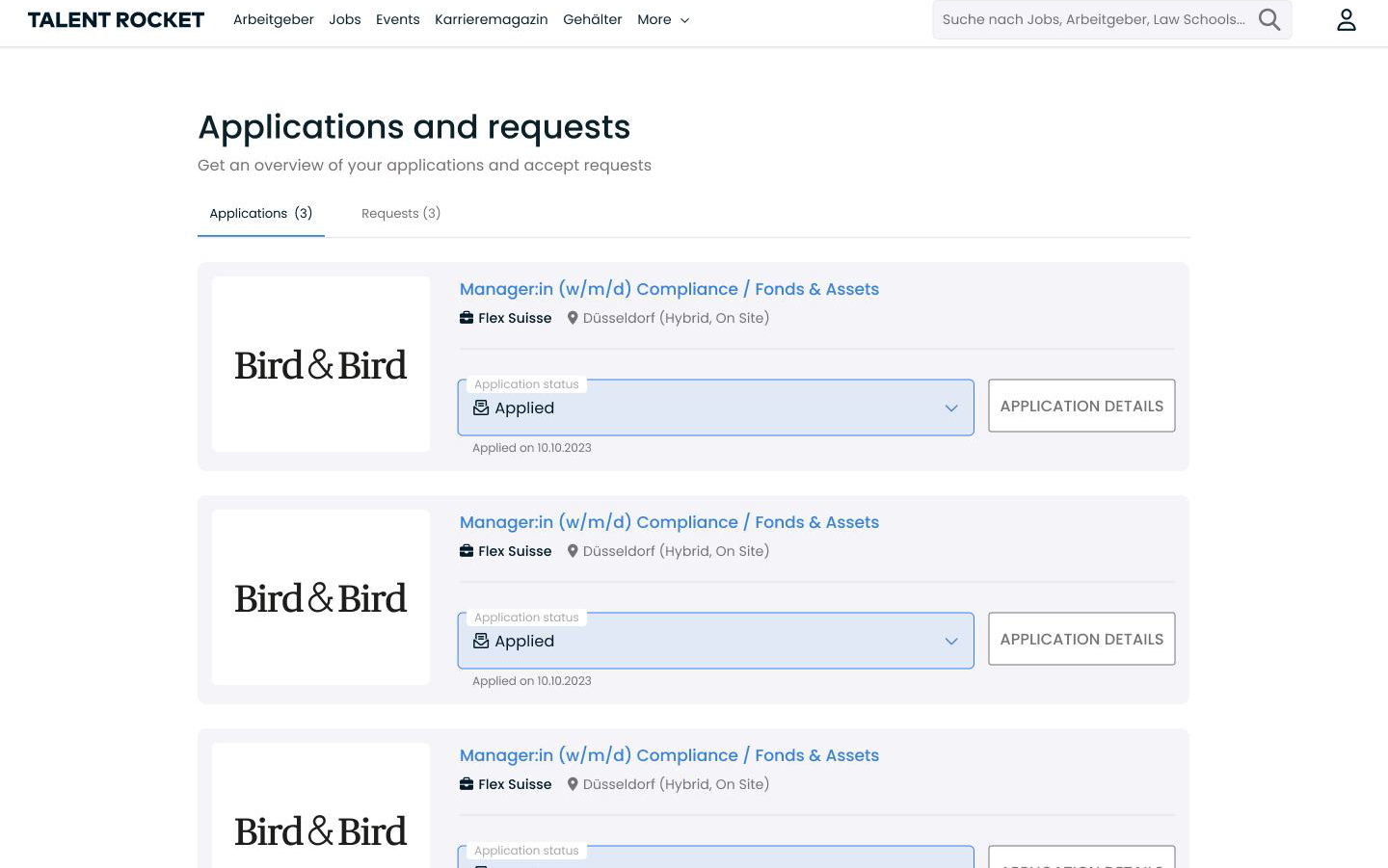
Close an application in two clicks — set the outcome, attach a personal note, done.
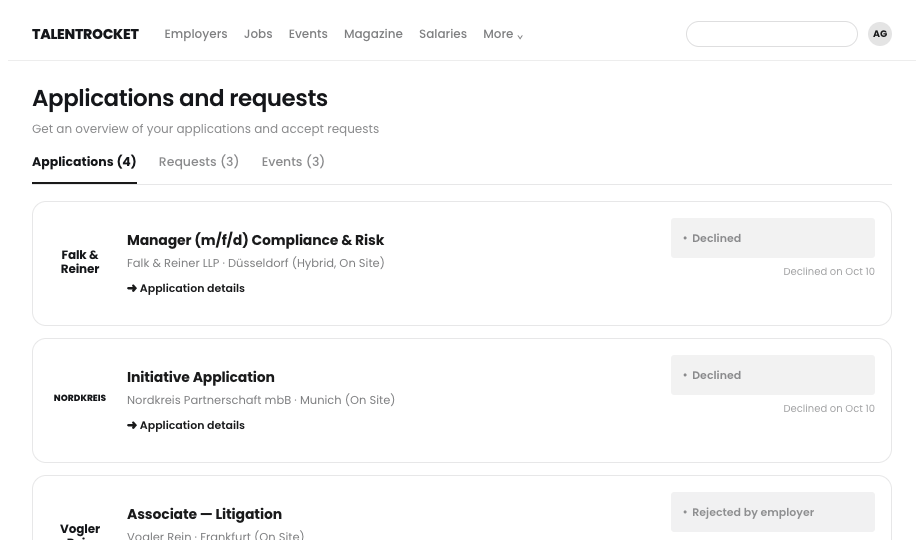
See exactly where you stand — status, timeline, and a human message behind every change.
Research
Benchmarked how other marketplaces solved outcome tracking, then mapped flows for both sides — what an employer must do to close an application, and what a candidate needs to know.
Testing
The details that decide adoption:
A — BADGE-ONLY STATUS
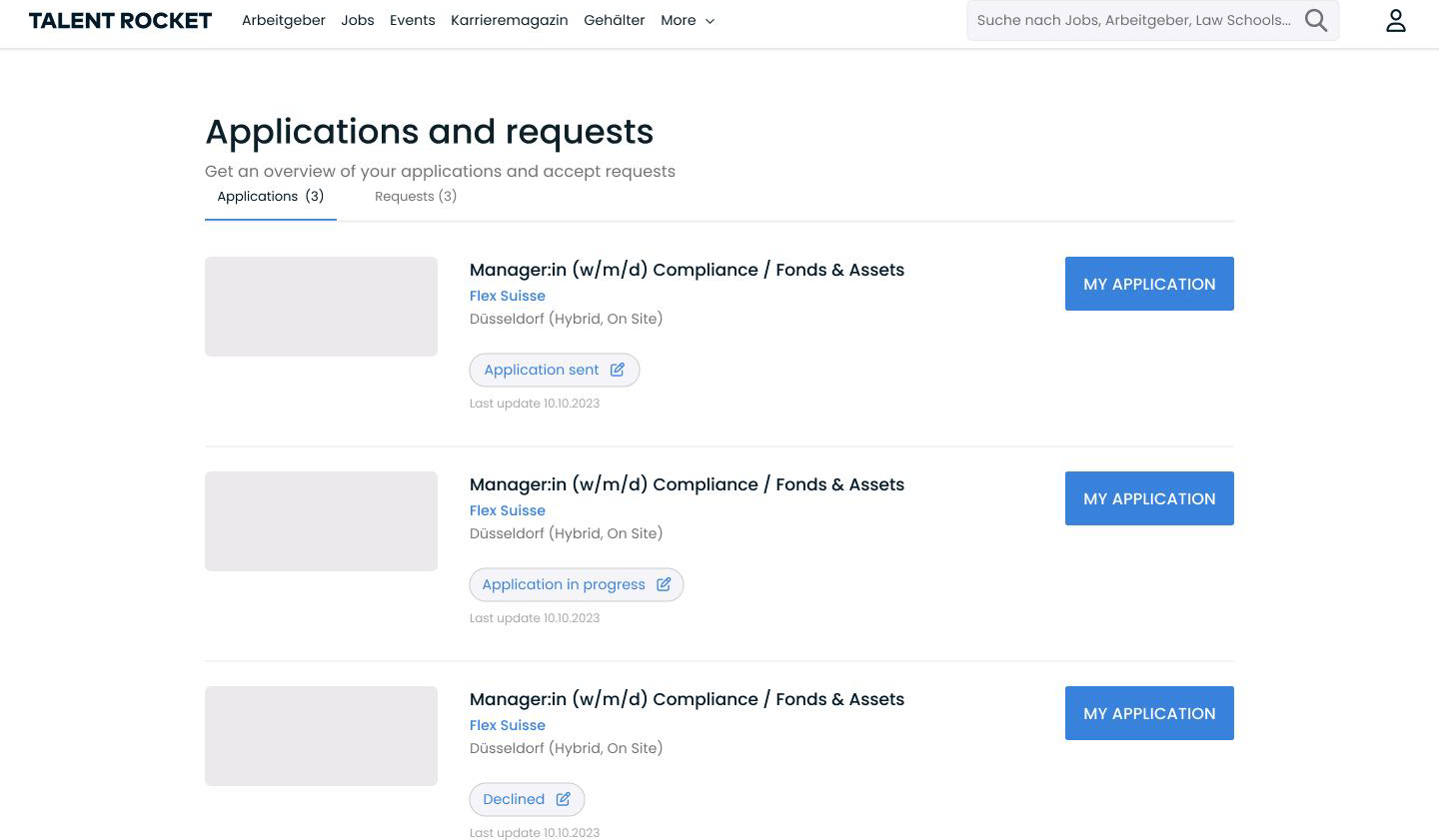
B — INLINE STATUS DROPDOWN
WHAT USERS TOLD US → WHAT WE SHIPPED
"{{ i.said }}"
→ {{ i.shipped }}
{{ r.label }}
{{ o }}
Still part of the platform today.
What began as a workflow redesign became part of Talent Rocket's core recruiting experience.
The feature continues to support candidates, employers, and internal teams through a shared source of truth.
What this project taught me.
Good marketplace products don't succeed because information exists. They succeed because every participant has a reason to keep that information accurate.
The biggest challenge wasn't designing a tracking feature. It was designing incentives that kept the system alive.
One thread of a solo tenure that covered the full spectrum.
{{ w.title }}
{{ w.body }}
NEXT PROJECT
entregas rapipago →
A delivery-tracking platform built from scratch — 6 roles, 2,000+ screens.